
Choosing the right security system is critical for your business. Whether you manage a retail store, construction site, warehouse or multi-level facility, you need the right technology to keep people, assets and operations protected at all times.
Once you have decided on the elements you will use in your security setup (bodycams/fog security/CCTV, etc), the challenge is figuring out whether a wired, wireless, or hybrid approach suits your specific site.
This guide explains the core differences between wired and wireless security, outlines clear pros and cons, and provides a simple framework to help match your site’s needs with the most effective security architecture.
The difference between wired and wireless security systems
What are wired security systems?
Wired security systems use physical cabling to connect cameras, sensors, alarms and control units. Power and data travel through these cables, providing a stable, reliable network. These systems are typically installed during construction or extensive upgrades due to the need for cable runs and wall access.
What are wireless security systems?
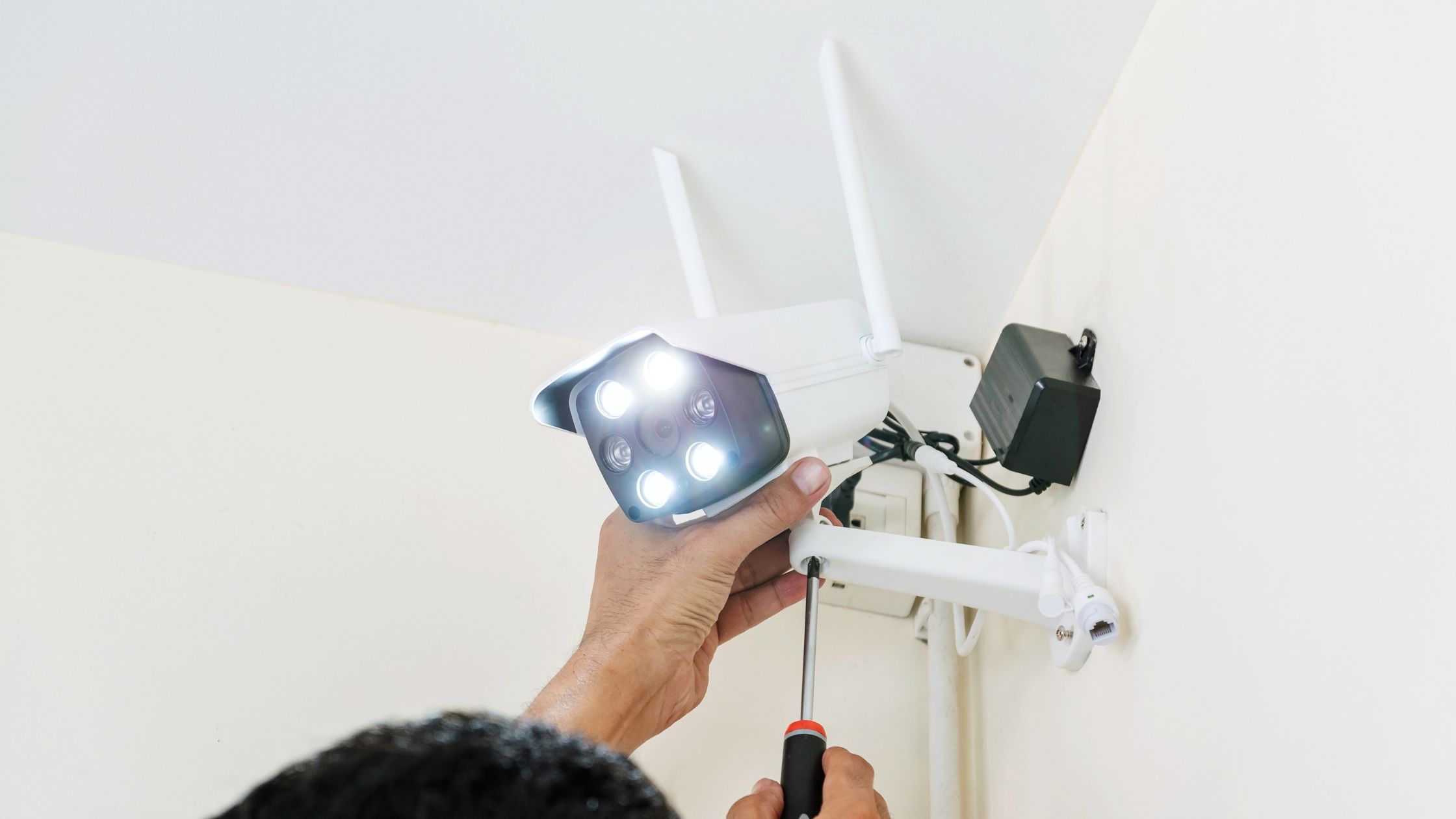
Wireless systems transmit data over secure radio frequencies or Wi-Fi networks. Devices communicate with a central hub without cables, giving them greater flexibility. They can be installed quickly, repositioned easily and expanded as your site grows or shifts.
What is a hybrid security system?
A hybrid system uses both wired and wireless elements. High-risk or high-bandwidth areas may use wired devices, while wireless devices serve peripheral, hard-to-cable or temporary regions.
Pros and cons of wired and wireless security solutions
Wireless security systems have become popular in Australia, especially for commercial environments that need speed, scalability and minimal disruption.
Advantages of wireless security
- Fast installation - Businesses benefit from quick installation with no cabling or significant electrical works required. This is ideal for retail, hospitality and live industrial sites.
- Scalable and flexible - If your site layout changes, cameras and sensors can be repositioned easily. This is especially helpful on construction sites or in warehouses with frequently shifting floor plans.
- Ideal for hard-to-cable areas - Wireless devices work well in heritage buildings, concrete-heavy facilities or large outdoor areas where running cable is costly or impractical.
- Lower upfront labour costs - Since there is no cable pulling or wall work, installation costs tend to be lower and timelines shorter.
Limitations of wireless security
- Battery management - Some wireless devices require battery changes or charging. This introduces a maintenance schedule that must be managed.
- Network dependence - Wireless systems rely on strong signal pathways. Interference, distance or thick walls can affect performance if not properly planned.
- Bandwidth constraints - High-resolution cameras can require more bandwidth than some wireless networks support. This can be resolved with a hybrid setup.
Advantages of wired security solutions
Wired systems remain a strong option for businesses with high security requirements and unreliable wifi connections.
- Stable performance - Since power and data travel through cables, you get consistent performance without interference.
- Supports high-resolution video - Ideal for 4K cameras, analytics and monitoring that require uninterrupted data transmission.
- Low ongoing maintenance - No batteries to replace and minimal device-level upkeep.
Limitations of wired security
- Longer installation timeline - Cabling work may require access to ceilings, walls and conduits, which can disrupt operations.
- Less flexible - Once installed, devices are less convenient to reposition.
- Higher upfront labour costs - More time and materials are required compared to wireless deployments.
Wired or wireless: Which security setup is best?
A simple decision framework helps most businesses land on the right solution for security.
- Assess your site layout. Complex internal structures or heritage limitations may steer you toward wireless or hybrid systems.
- Review your risk profile. High-risk zones, high-value assets and mission-critical operations often benefit from wired stability, while buildings in areas with limited wifi may require a wired solution
- Consider uptime and monitoring. Sites that cannot afford downtime should prioritise reliability.
- Think about your timeline. If you need security activated asap, wireless systems offer the quickest deployment.